
In older timepieces, shock protection is generally absent, and pivots are therefore susceptible to bending or fracture as a result of impact.
Although shock-resistant systems became more common from the mid-20th century onward, they are rarely applied to the pallet staff.
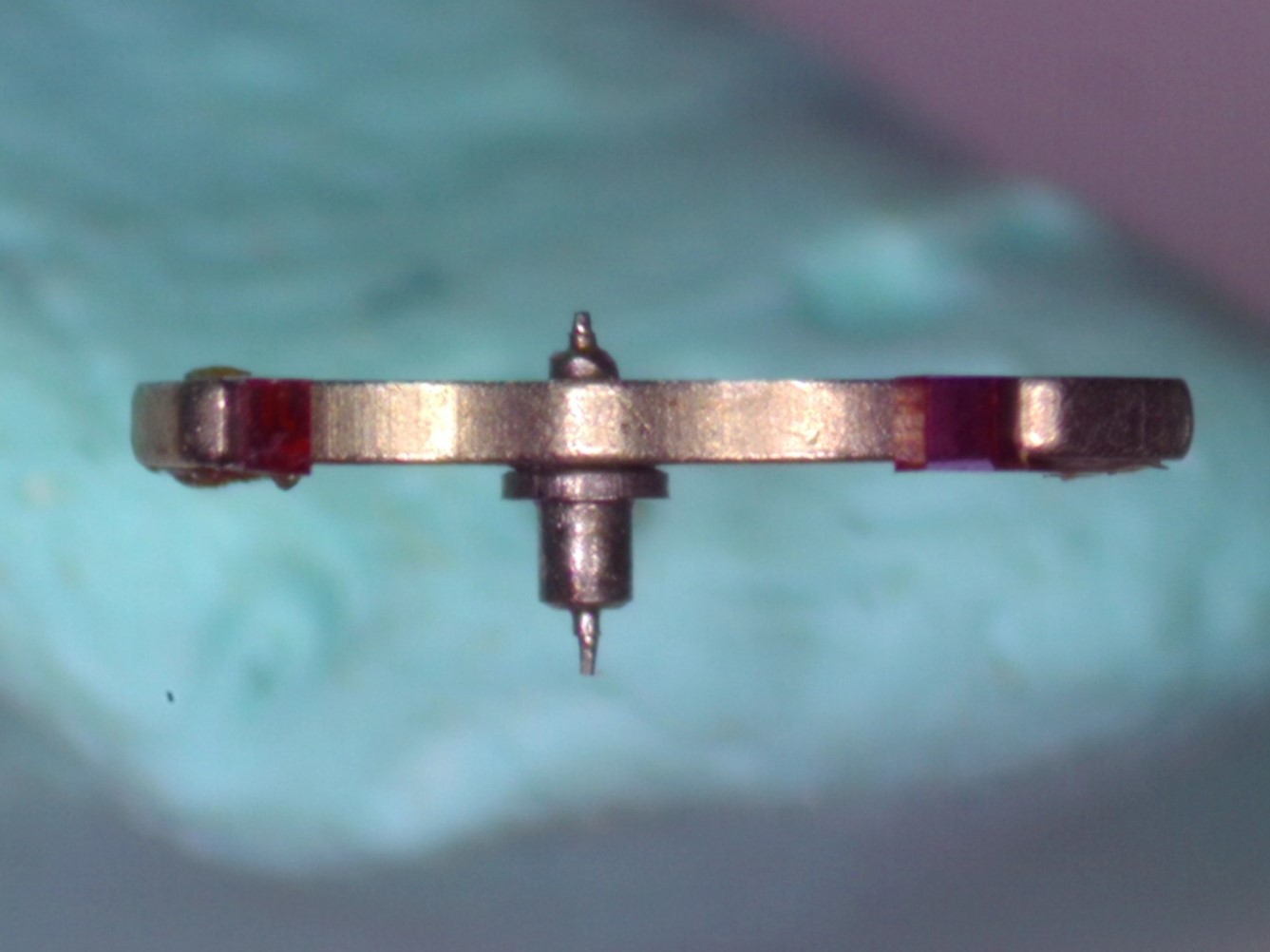
The pallet staff shown had previously been repaired; however, the material appears to be too soft, resulting in significant wear.
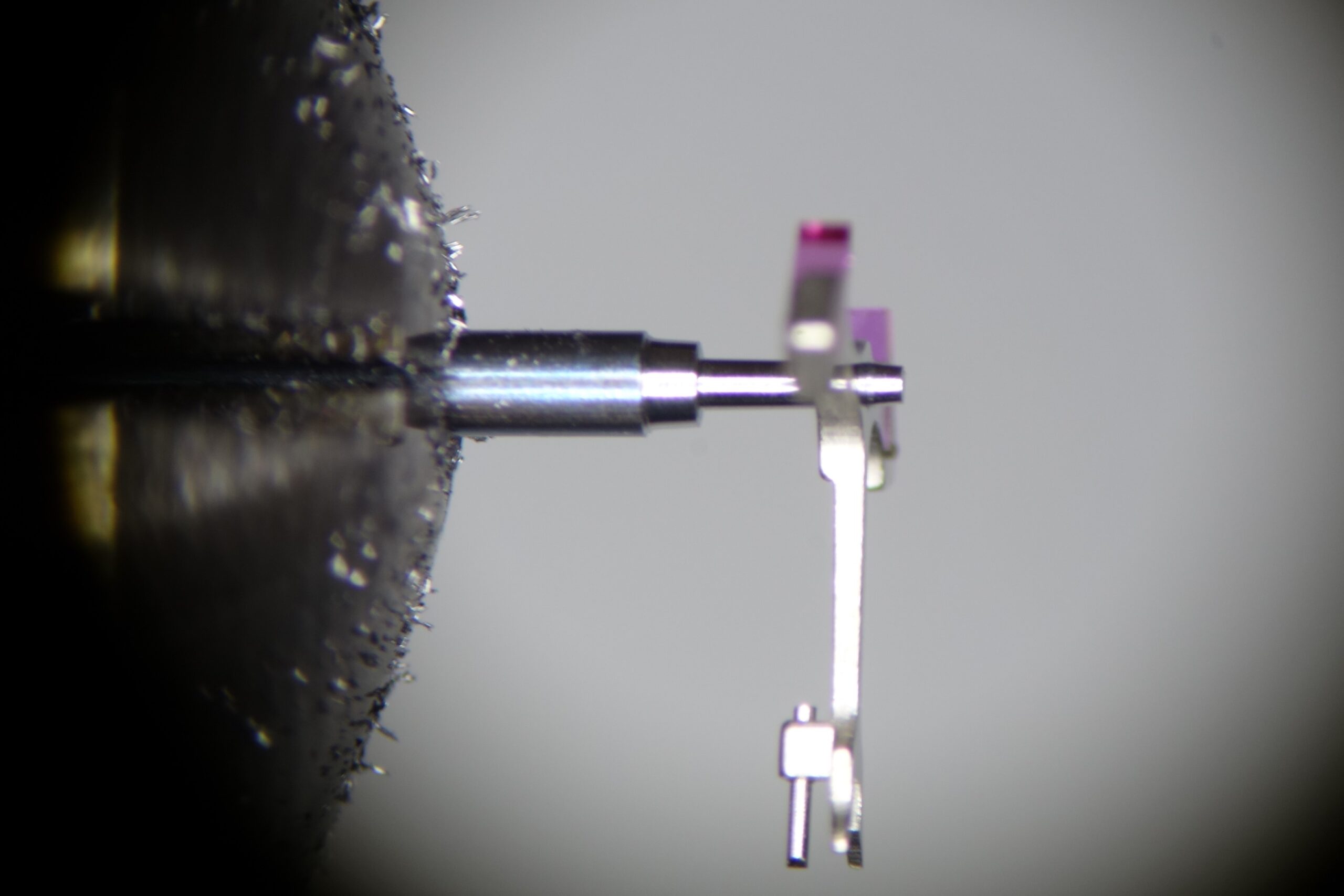
A suitable carbon steel blank is mounted in the lathe and turned to form.
As is typical for movements of this period, the staff is designed for a friction fit (earlier examples may employ a threaded construction), and is made accordingly.
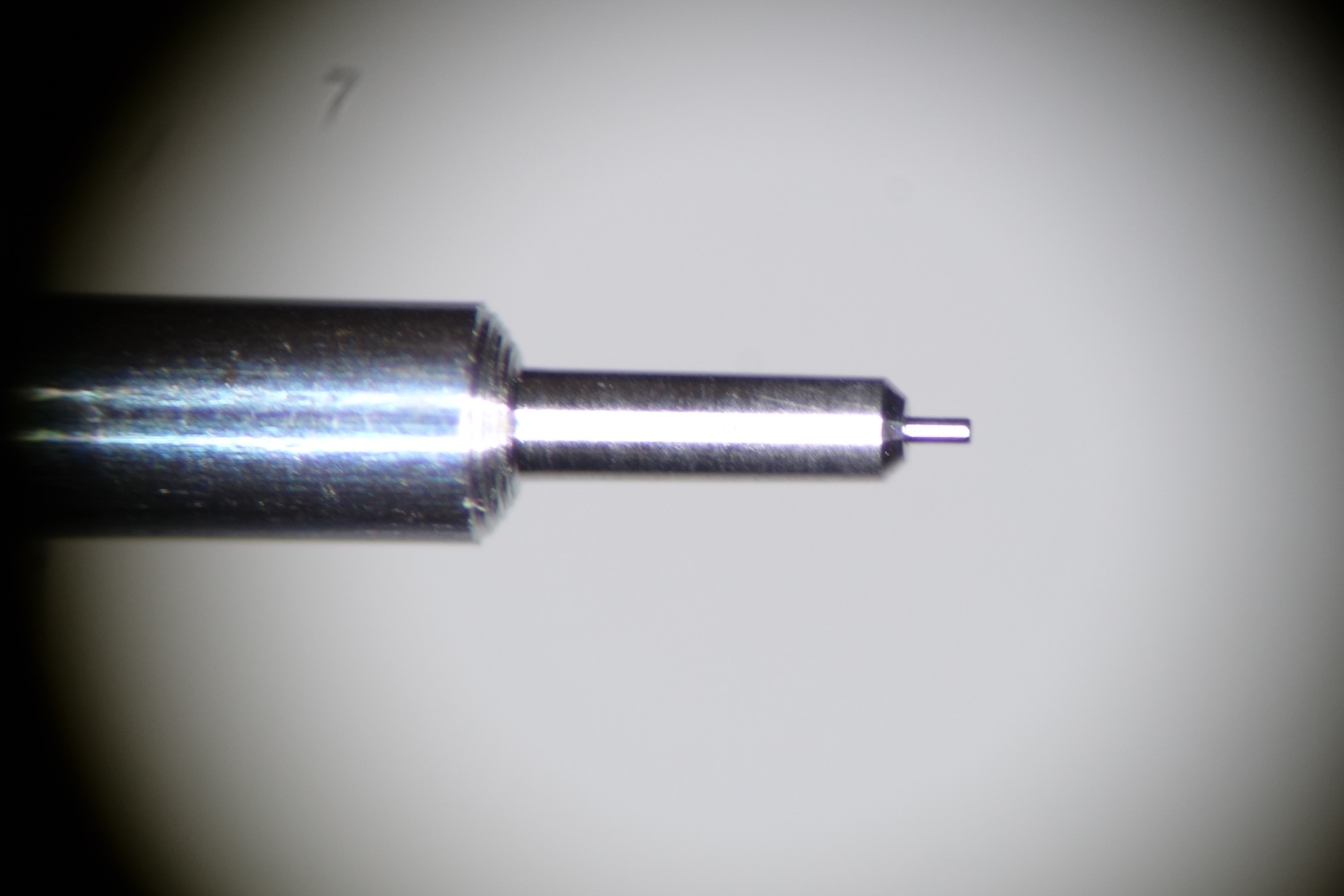
The upper pivot is formed to suit the jewel, then polished and lightly burnished.
The work is removed from the lathe, re-centred, and the lower pivot is finished in the same manner.
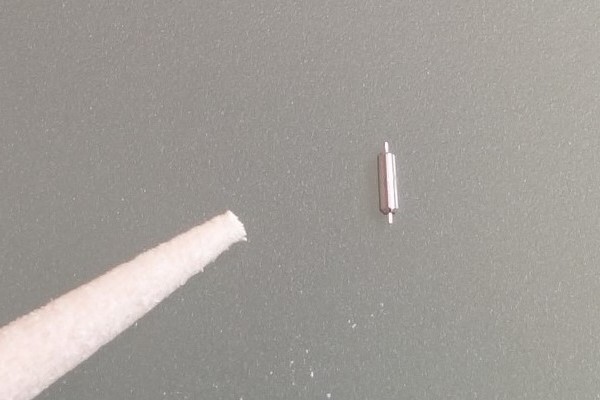
For reference, the pallet staff is shown alongside a wooden toothpick to illustrate its scale.
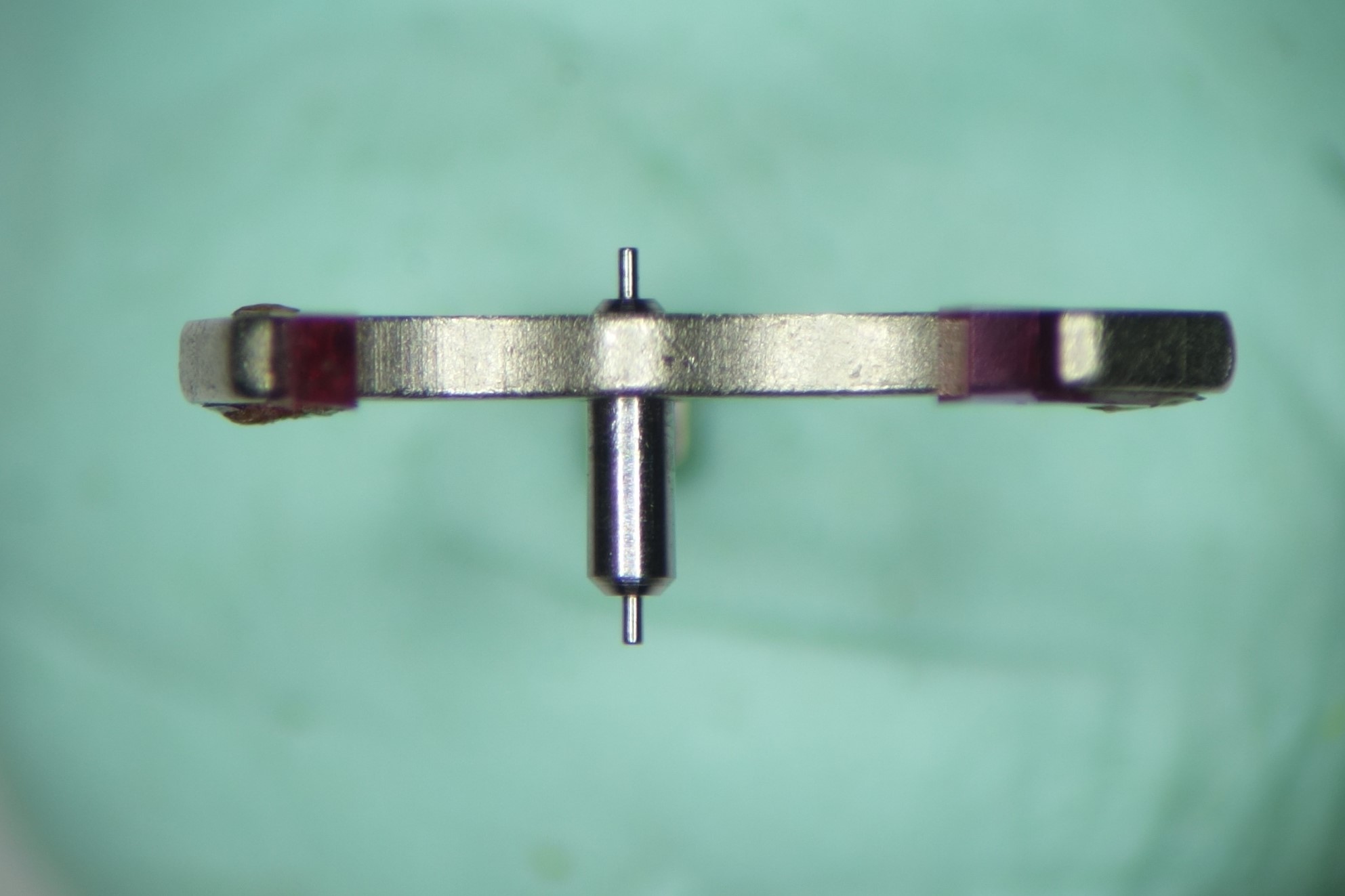
The staff is thus completed.