
The mainspring barrel transmits force continuously to the centre wheel, placing a constant lateral load on the arbor.
Over time, this causes the hole in the plate to wear in one direction, becoming progressively enlarged.
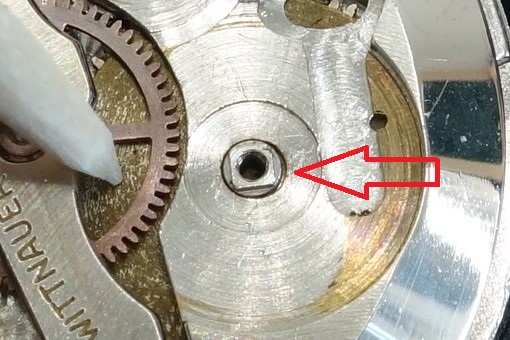
In cases of minor wear, the hole may be corrected by closing and re-forming it while maintaining the original centre.
However, when the wear is pronounced, as shown here, such an approach is no longer sufficient.
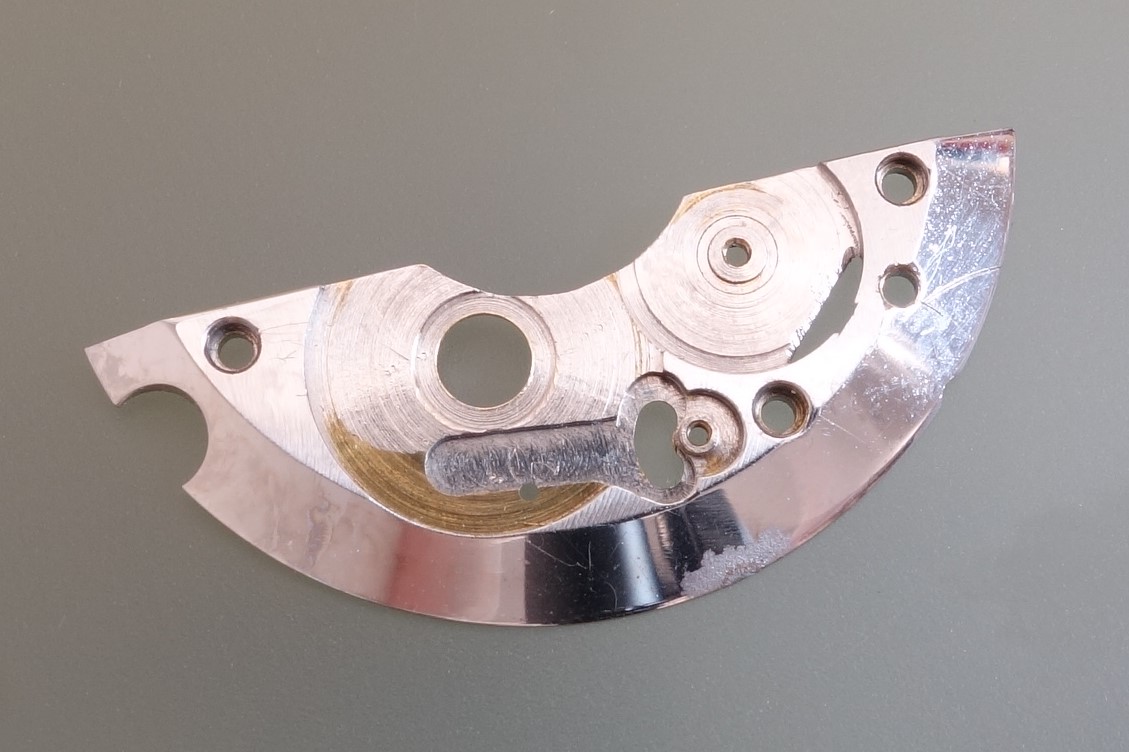
The worn hole is opened using the lathe, with particular attention given to maintaining correct alignment with the original axis.
Any deviation at this stage would result in the barrel running out of true, potentially causing contact with adjacent components and disrupting the stable transmission of power through the train.
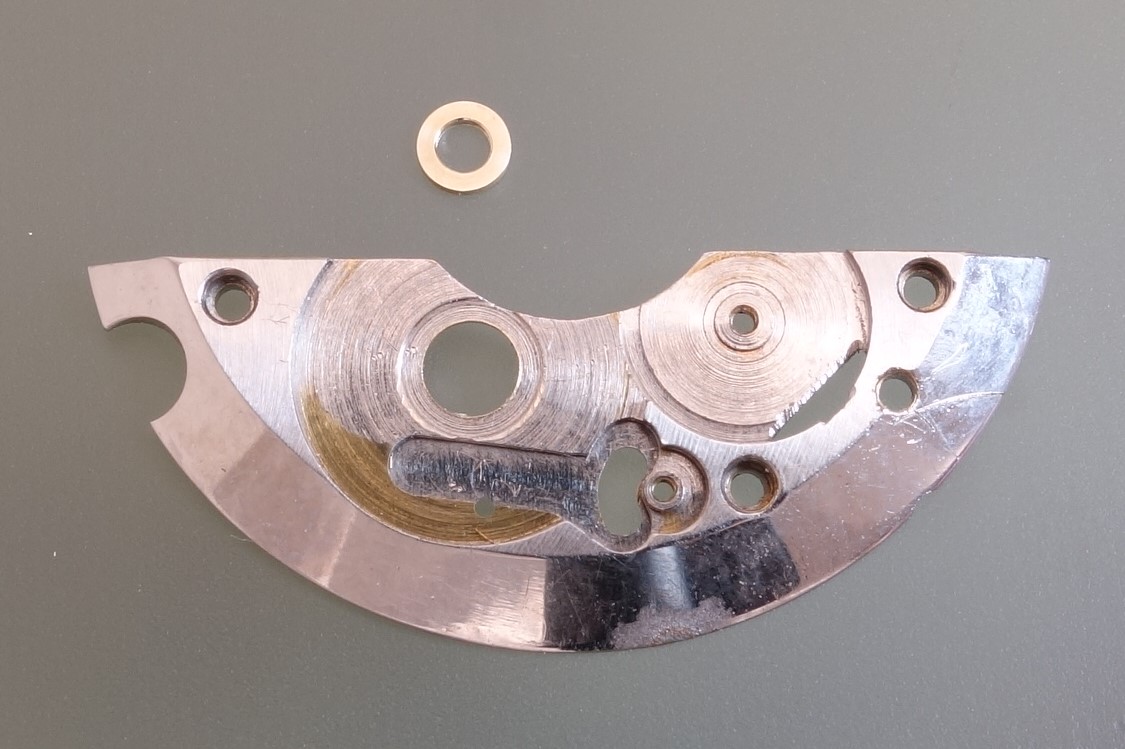
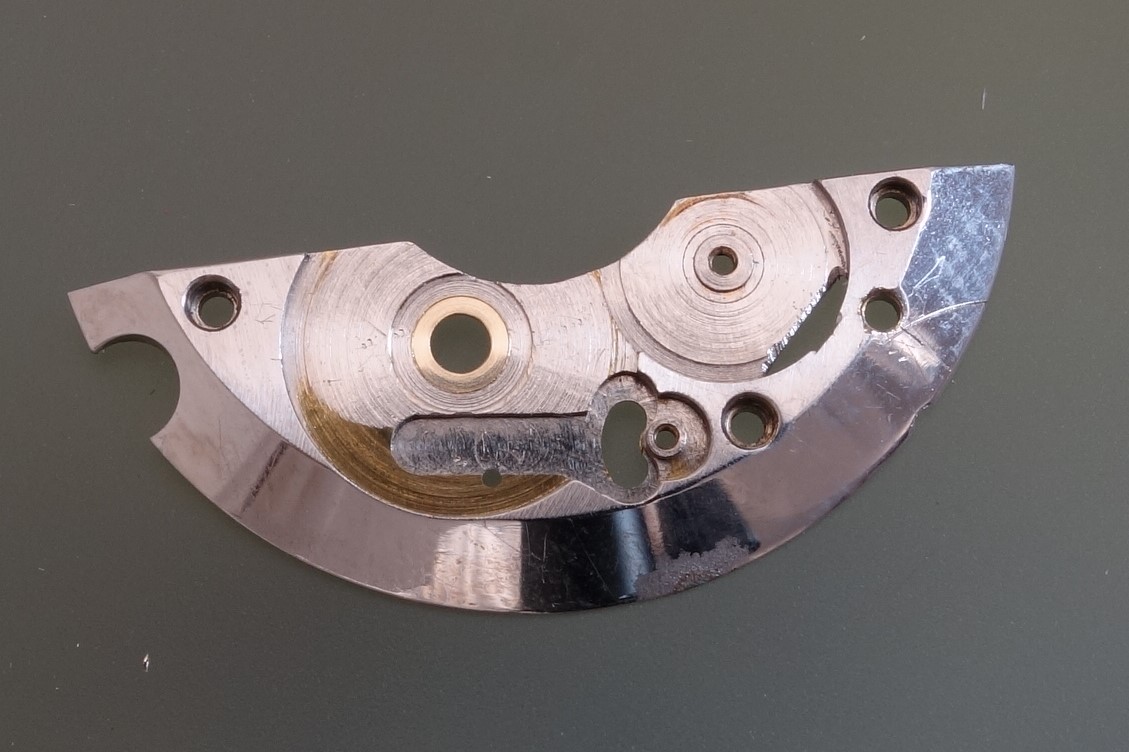
A bushing is fabricated from phosphor bronze alloy, selected for its resistance to wear, and fitted by means of a friction fit.
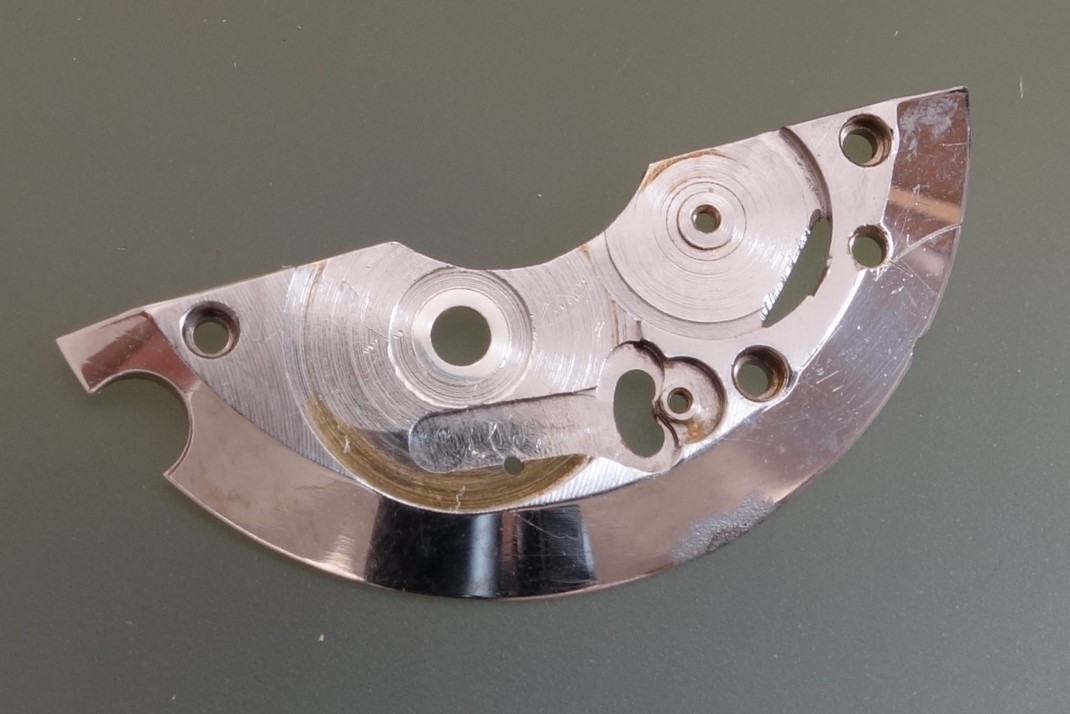
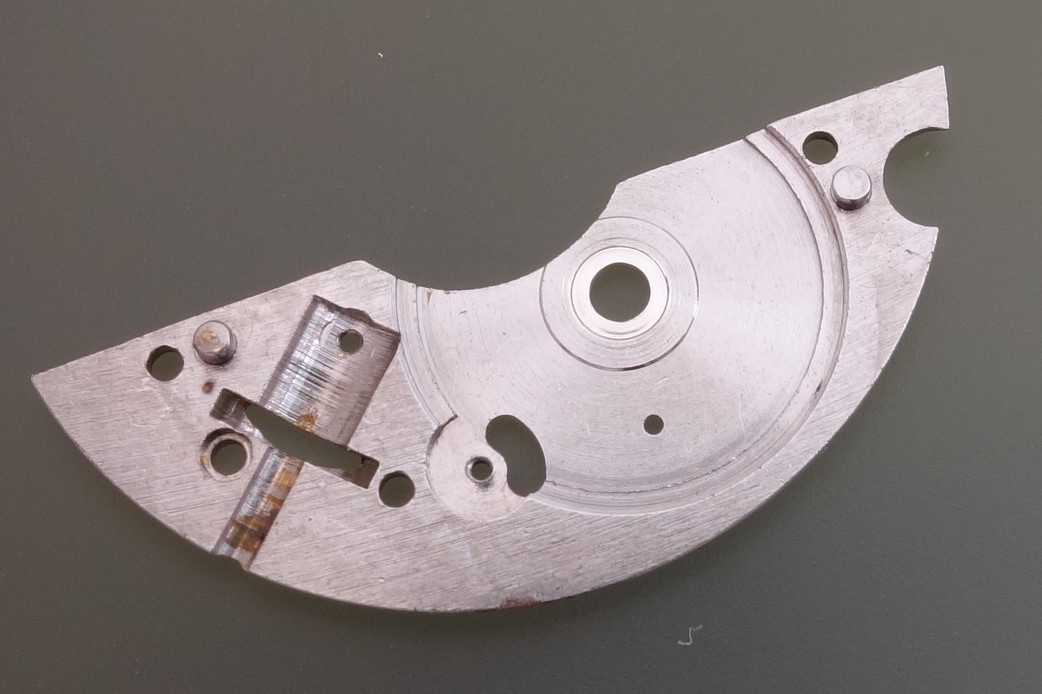
While functionally complete, the plate is then rhodium-plated to harmonise the appearance with the surrounding surface.
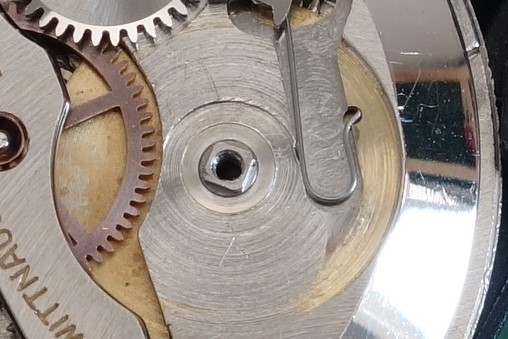
The work is thus completed.
Comparison with the initial condition confirms that the excess clearance has been eliminated.