
The click spring of an antique movement had fractured, preventing the mainspring from being wound.
A replacement was therefore fabricated.
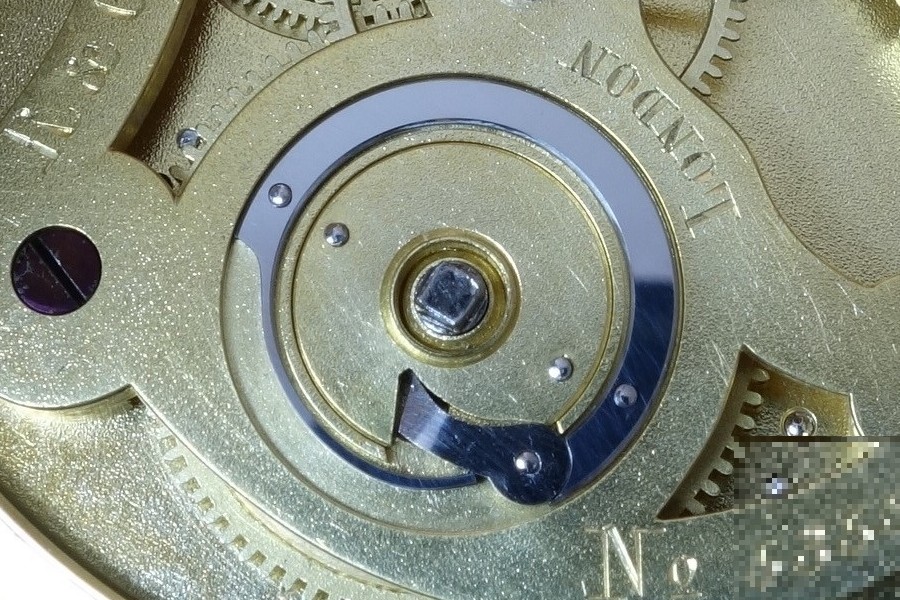
The completed component is shown here first, to provide a clear reference for the process.
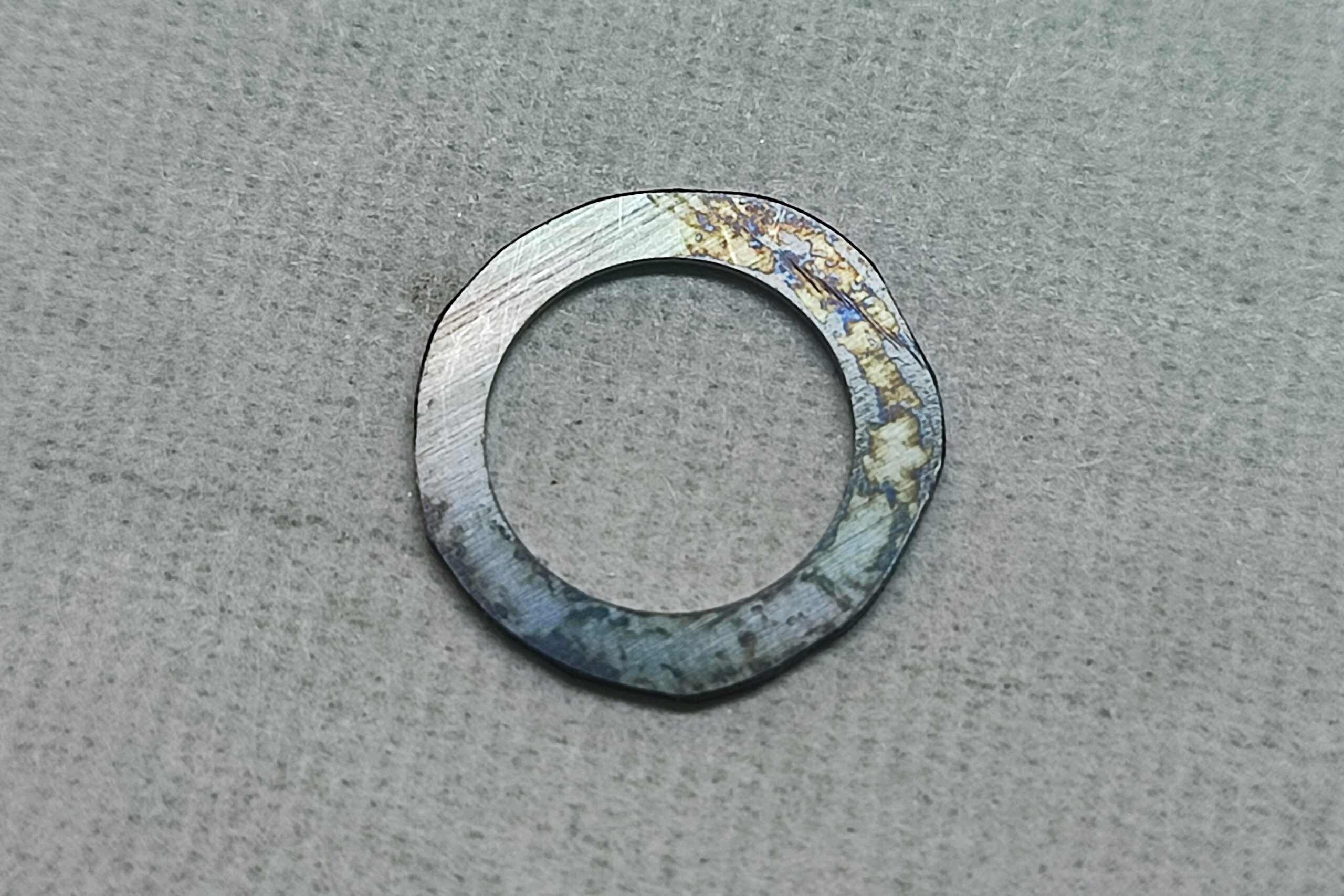
As the spring forms a circular profile around the barrel arbor, it is first cut from a flat carbon steel blank, and the inner diameter is established on the lathe.
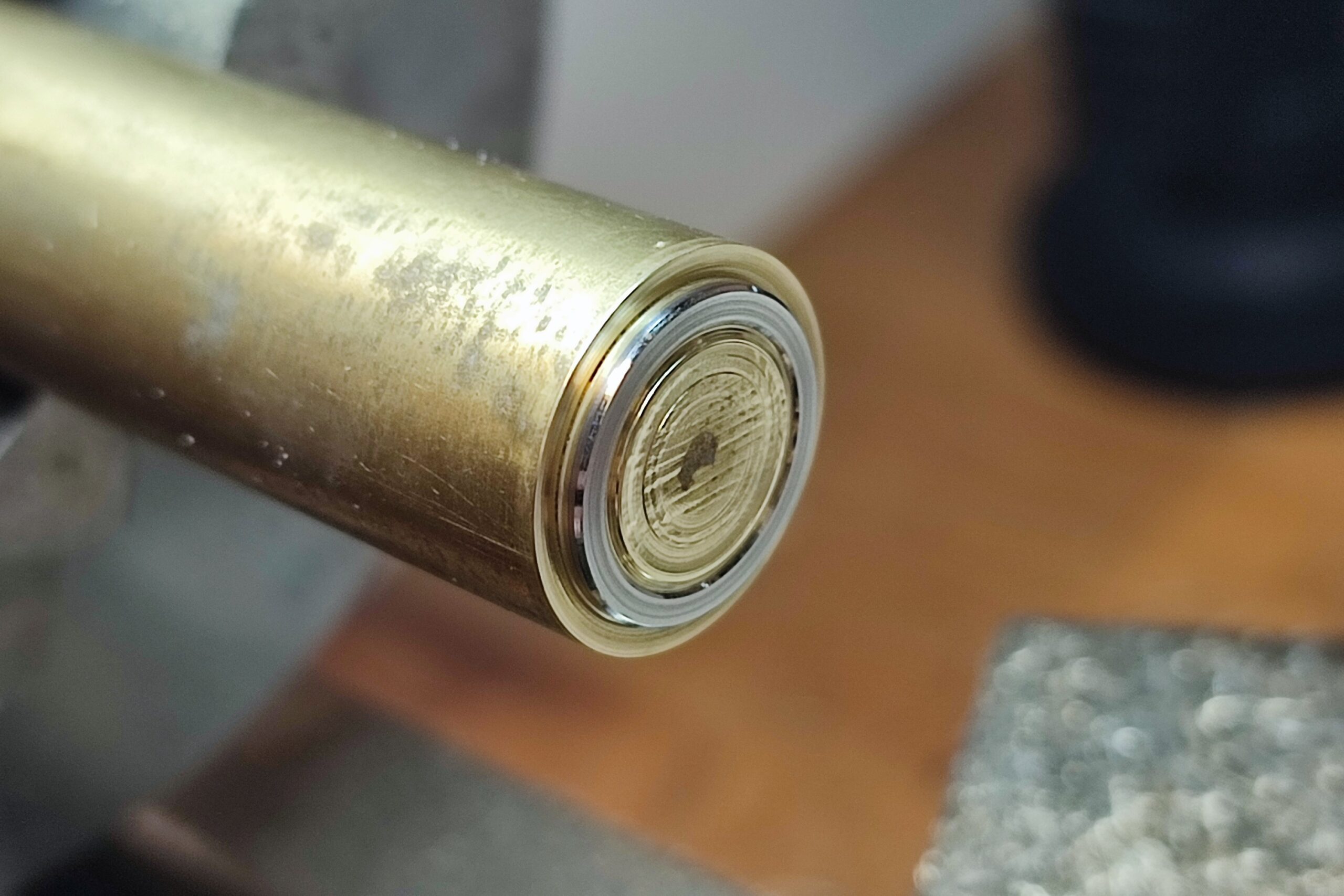
A brass holding fixture is then made, allowing the inner diameter to be secured while the outer profile is turned.

The ring, forming the basis of the new spring, is thus completed.
(Left: original spring / Right: newly fabricated ring)
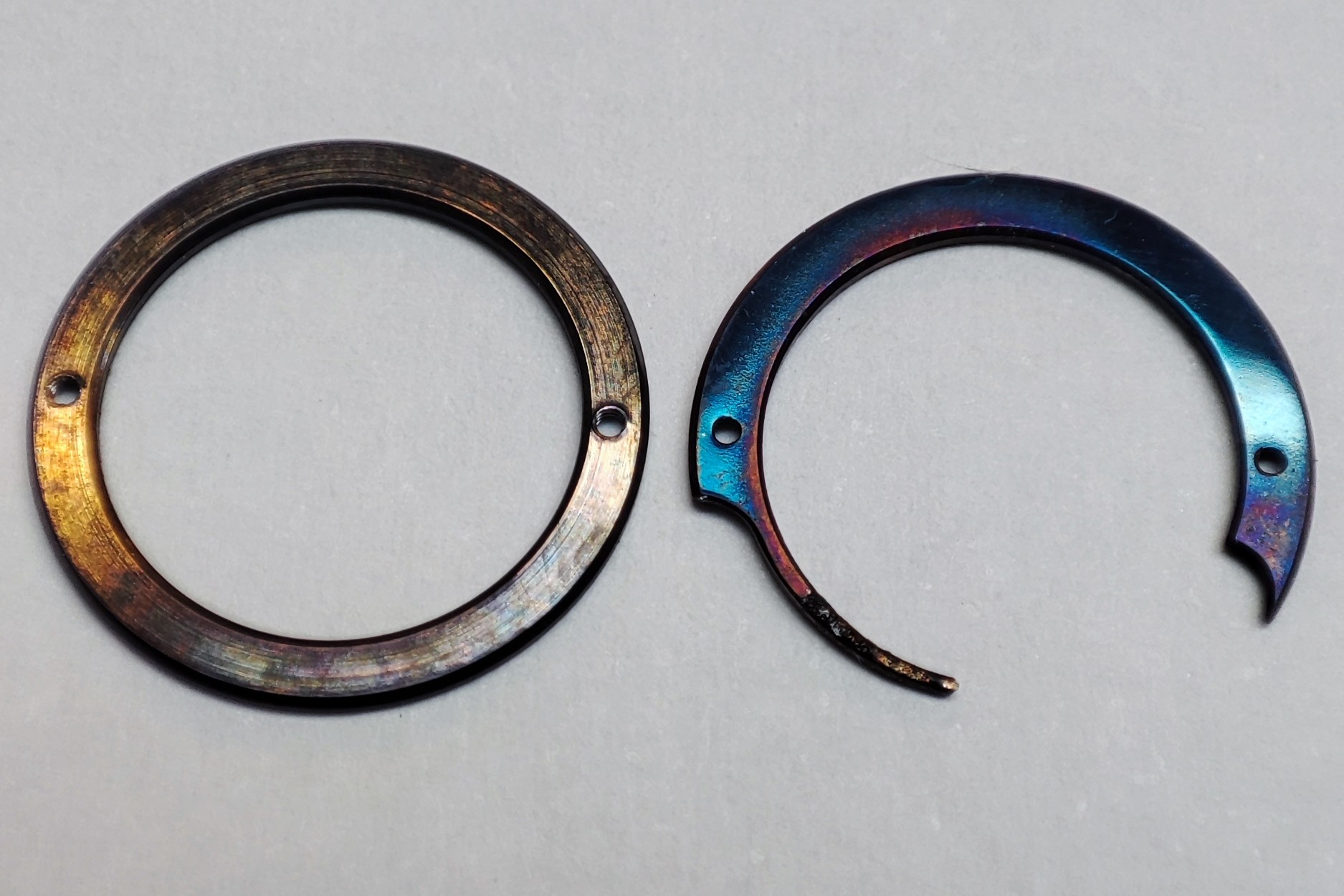
As the spring is secured to the plate by two screws, the holes are positioned, drilled, and threaded accordingly.
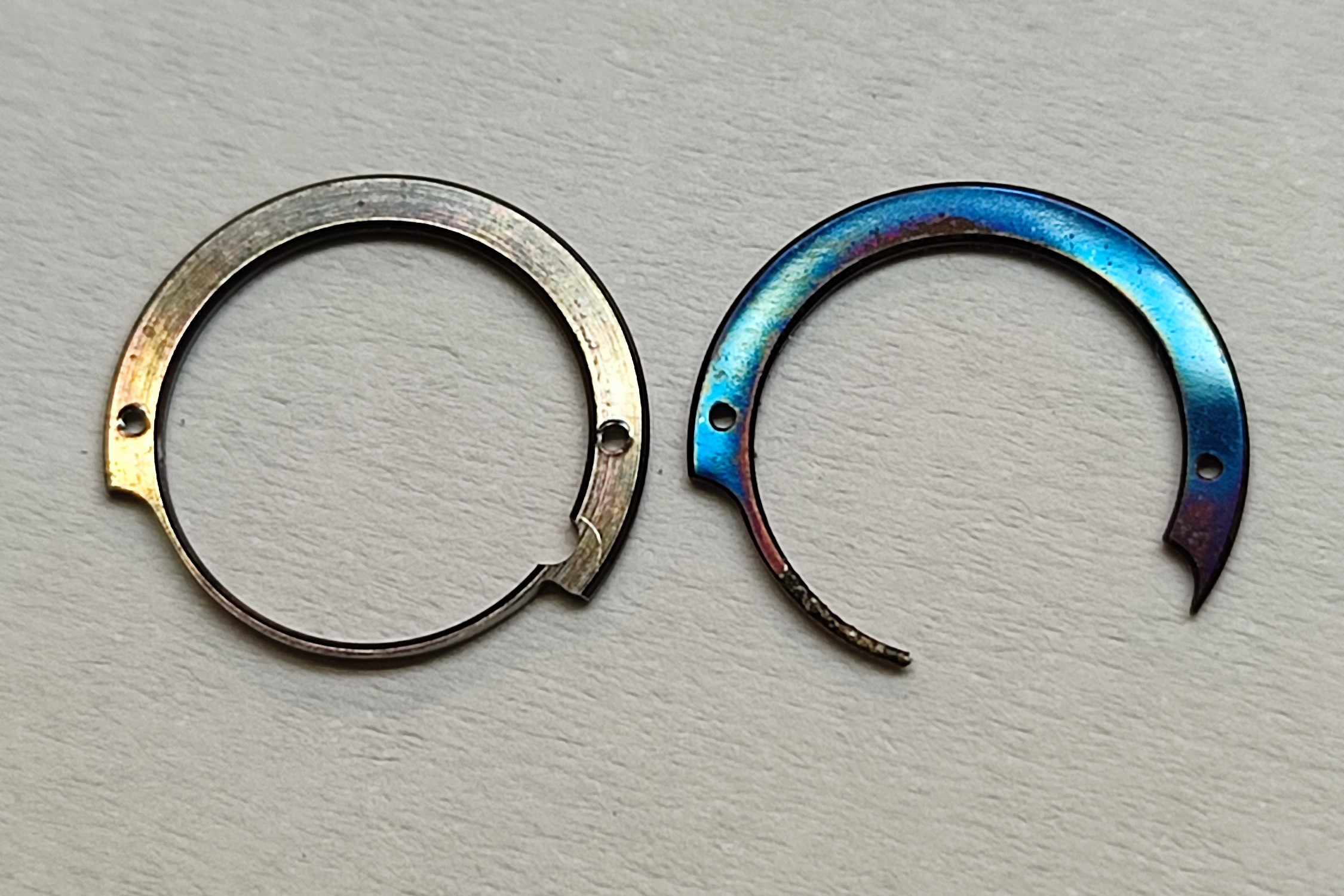
The spring section is then shaped by hand.

At an intermediate stage, the upper surface is polished.
As the piece remains in ring form at this point, a more even and flat surface can be achieved.
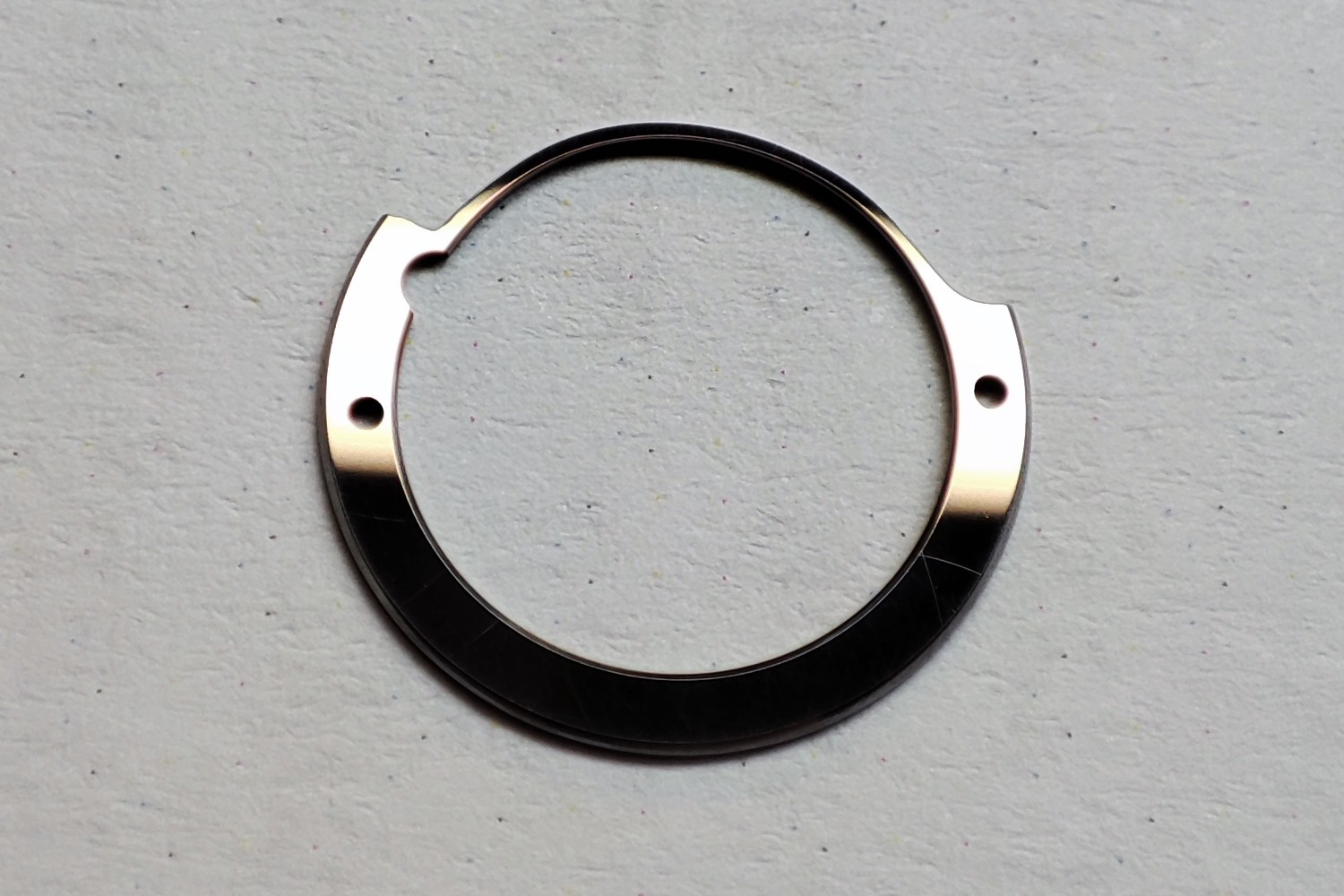
Surface finishing is brought close to completion.
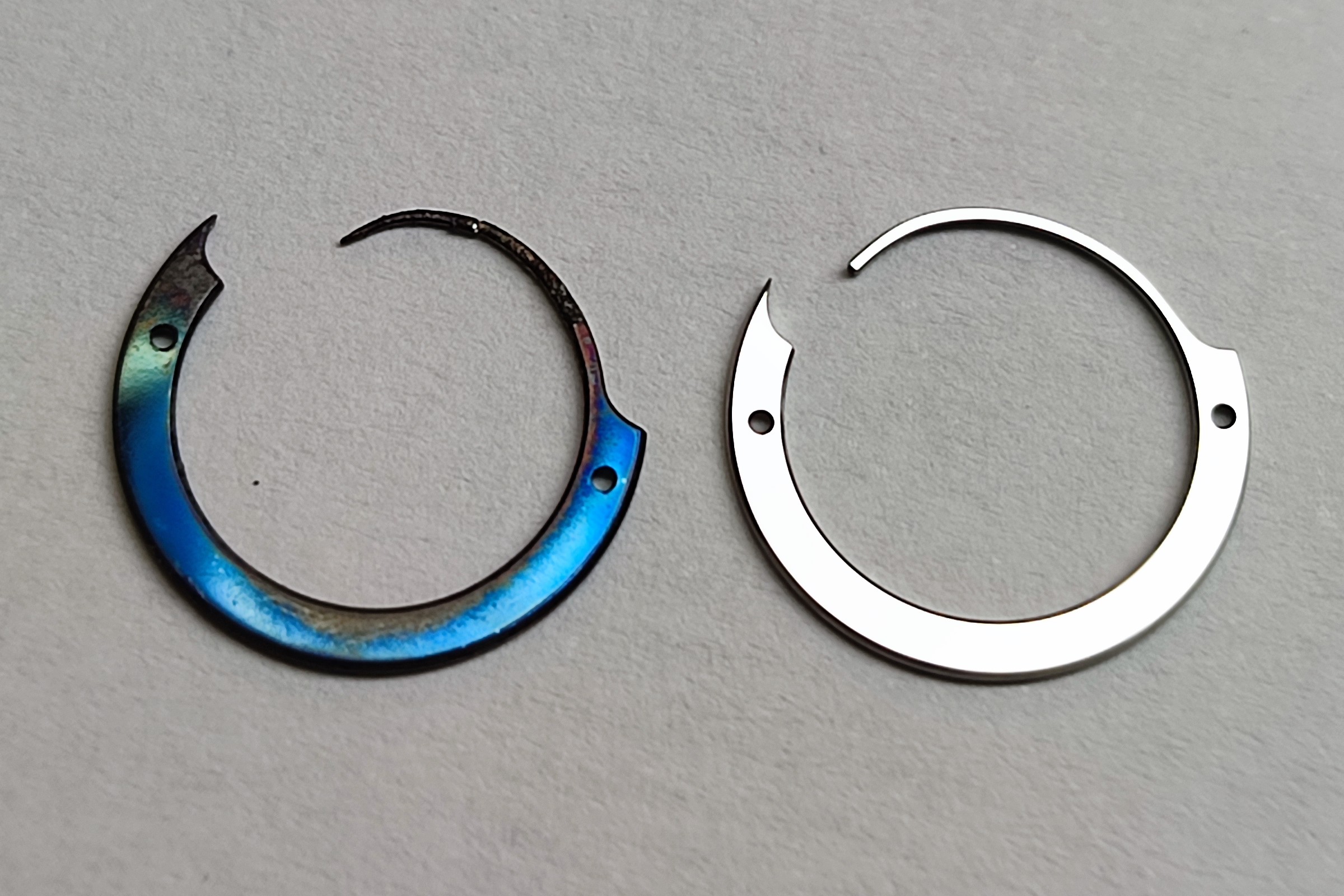
The ring is then opened, and the spring section is formed to provide the required click action.
Care is taken to maintain a consistent width, allowing the spring to flex evenly and avoid localised stress.
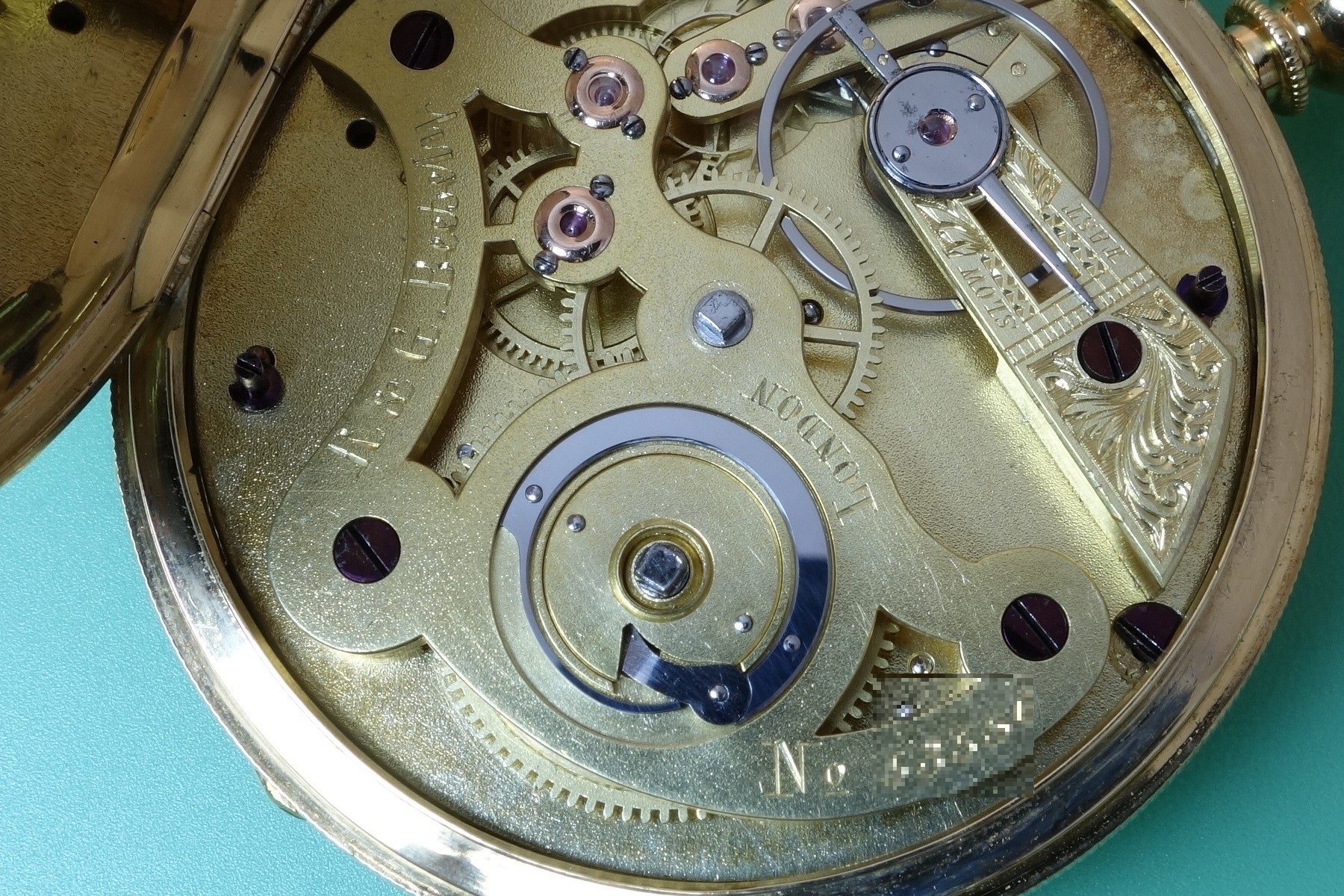
The work is thus completed.